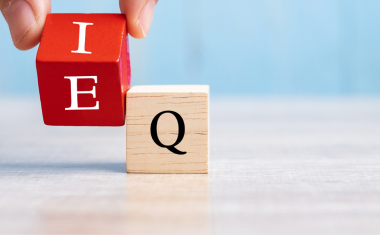
Why Emotional Intelligence Improves Leadership Through Self-Awareness
Leadership begins with self-leadership because before you can understand how others respond to you, you need to understand yourself. That includes recognising your emotions, behavioural patterns, strengths, frustrations and triggers, as well as becoming more aware of the impact those things can have on the people around you.
Imagine a team member challenges your decision during a meeting. You immediately feel defensive because you interpret the challenge as criticism of your judgement. Without self-awareness, that emotion can quickly influence your behaviour. You may interrupt, dismiss the challenge or start defending your position before you’ve properly understood the other person’s point.
Emotional Self-Awareness creates an opportunity to notice what is happening before the emotion takes control of the conversation. You might recognise that you are feeling defensive and ask yourself whether reacting from that position will help you achieve the outcome you want.
This is why I regularly use the principle that awareness creates choice. Awareness doesn’t remove the emotion, but it gives you more choice about what you do with it. Rather than immediately defending yourself, you might say, “Talk me through what concerns you.” The situation hasn’t changed, but the quality of the leadership conversation has.
The more aware leaders become of their own emotional responses, the more intentional they can become about their behaviour. That matters because people rarely experience leadership through a job title. They experience it through the way their leader communicates, listens, challenges, responds and makes decisions.
Emotional Intelligence Helps Leaders Respond Rather Than React
Pressure reveals a great deal about leadership. Deadlines move, customers complain, people make mistakes, targets get missed, and colleagues sometimes say things we weren’t expecting. Leaders experience emotions the same way everyone else does, but effective leadership depends heavily on what happens next.
Impulse Control, one of the competencies within the EQ-i 2.0 model I use in my work, helps leaders create a gap between feeling something and acting on it. That gap can be incredibly important because a reactive response often creates consequences that the leader then has to repair.
A leader who reacts while frustrated may send an email they later regret, respond sharply to somebody who has made a mistake or make a decision before they have enough information. An emotionally intelligent leader is more likely to recognise the emotion, consider the outcome they want and choose a response that gives them a better chance of achieving it.
This doesn’t mean suppressing emotions or pretending everything is fine. Emotional Intelligence involves recognising what you feel and using that information intelligently, rather than letting emotion decide for you.
A useful question for any leader is: When pressure increases, what version of your leadership do other people experience? The answer can reveal a great deal about your current level of self-awareness and the choices you make when situations become difficult.
Why Emotional Intelligence Improves Leadership Communication
Leadership happens through conversations. Leaders explain expectations, give feedback, address performance, manage change, resolve disagreements, coach people and make decisions. The quality of those conversations directly influences trust, confidence, accountability and performance.
Strong communication requires more than speaking confidently. It also requires the ability to listen, understand and avoid rushing to conclusions. I often encourage leaders to be curious and suspend judgment, because when someone behaves unexpectedly, it’s easy to create a story about why they behaved that way.
A leader might think, “They don’t care,” “They’re being difficult,” or “They’re not committed.” Those statements can quickly start to feel like facts, even though they may be interpretations. Emotional Intelligence helps leaders recognise the difference between what has actually happened and the meaning they have attached to it.
An emotionally intelligent leader is more likely to ask, “What’s happening?” “What am I missing?” or “How are you seeing this?” before deciding what the behaviour means. That connects closely with another principle I use regularly: Better Questions Create Better Thinking.
Listening and asking better questions can help leaders understand what is really happening rather than simply responding to their first interpretation of the situation. I explored this further in Why Leadership Communication Matters, because communication remains one of the main ways people experience leadership every day.
Empathy Strengthens Leadership Without Lowering Standards
Empathy is sometimes misunderstood as being soft, avoiding difficult conversations or lowering expectations. I see it very differently. Empathy means making a genuine effort to understand another person’s perspective, and you can do that without agreeing with their behaviour or changing the standard you expect.
Imagine an employee repeatedly misses deadlines. An emotionally intelligent leader doesn’t ignore the issue because the employee is under pressure, but they also don’t immediately assume the person is lazy or disorganised. Instead, they explore what is happening before deciding how best to respond.
Perhaps priorities aren’t clear. Maybe the person has taken on too much, lacks confidence in part of the role or hasn’t understood what good performance looks like. They may also need greater accountability. Understanding the reason allows the leader to choose a more appropriate response.
That response may still involve a challenging conversation. One of my leadership principles is that you care enough to challenge. Care without challenge rarely creates development, while challenge without care can easily feel like criticism. Strong leaders learn to combine the two, maintaining clear standards while still understanding the person behind the performance issue.
Emotional Intelligence Training
Develop greater self-awareness, improve communication, strengthen relationships and make more intentional choices through practical Emotional Intelligence development.
Find out moreEmotional Intelligence Improves Leadership Decision-Making
Leadership requires decisions, and emotions influence those decisions whether we acknowledge them or not. A leader may continue with a project because they don’t want to admit their original decision was wrong, avoid challenging a high performer because they fear losing them or reject an idea because they have a difficult relationship with the person who suggested it.
This is where Reality Testing becomes particularly valuable. Reality Testing helps us distinguish between facts, opinions, assumptions and emotions so that we can make decisions from a clearer position.
Before making an important decision, a leader can ask: What do I actually know? What am I assuming? What evidence supports my thinking? What else could be true? Those questions don’t remove judgement from leadership. They improve the quality of that judgement by challenging assumptions before they become conclusions.
The CIPD’s research on selecting and developing senior leaders also highlights Emotional Intelligence and interpersonal capability as qualities associated with effective senior leadership. That makes sense because leadership decisions rarely affect numbers alone. They also affect people, relationships, confidence and behaviour.
Why Emotional Intelligence Improves Leadership Relationships
People don’t experience your intentions. They experience your behaviour. A leader may genuinely believe they are approachable, supportive and open to challenge, while their team experiences something quite different.
Perhaps the leader becomes defensive when questioned, interrupts when somebody disagrees or asks for ideas but consistently chooses their own solution. None of those behaviours necessarily come from bad intent, but intent doesn’t remove impact.
Emotionally intelligent leaders become more interested in understanding how other people experience them. That requires openness to feedback, self-awareness and a willingness to reflect on the difference between intention and impact.
It also connects with credibility through congruence. When a leader’s words, values and behaviour broadly align, people know what they can expect. Trust becomes easier to build because the leader’s behaviour reinforces what they say.
If you tell your team that you welcome challenge, what happens when somebody genuinely challenges you? Your response tells them far more than the original statement ever could.
Emotionally Intelligent Leaders Create Greater Ownership
Leadership isn’t about becoming the person who solves every problem. In fact, constantly providing answers can create dependency, especially when people begin to believe the leader is the only person capable of making difficult decisions.
A team member comes to you with a problem, you know the answer, and you give it to them. The issue disappears quickly, but the next time a similar problem arises, they come back again because they haven’t developed their own thinking.
An emotionally intelligent leader learns when to resist the temptation to provide the immediate answer and coach instead. Questions such as “What have you considered?”, “What options do you have?”, “What do you think we should do?” and “What support do you need from me?” encourage people to think and take greater responsibility.
I’ve always believed that people support what they help create. When leaders involve people appropriately in thinking and decision-making, they help develop confidence, judgement and ownership.
This becomes increasingly important as organisations grow. Leaders need people who can think, make sound decisions and take responsibility within clear parameters rather than constantly waiting for permission.
Emotional Intelligence Can Be Developed
One thing I like about Emotional Intelligence is that it can be developed. It isn’t about labelling somebody as emotionally intelligent or emotionally unintelligent, and an Emotional Intelligence assessment isn’t a test with a pass mark.
Its purpose is to create awareness.
Someone may recognise that they become impatient under pressure, while another leader may discover they avoid conflict. Someone else may realise they make assumptions too quickly or struggle to express disagreement assertively. That awareness provides a starting point because people can’t change a behaviour they haven’t yet recognised.
The next question becomes: What will I do differently?
You might decide to pause before responding when you feel frustrated, ask another question before offering your opinion or seek feedback after a difficult conversation. You may also choose to address issues earlier rather than allowing them to build.
Small changes in behaviour, repeated consistently, can make a considerable difference to how people experience your leadership. That is also why my approach to Emotional Intelligence Training & Coaching focuses on practical application rather than simply understanding a model.
It’s not what you know. It’s what you apply.
Start With One Leadership Conversation
Improving Emotional Intelligence doesn’t require you to change every aspect of your leadership at once. A more practical approach is to choose one conversation and pay closer attention to yourself during it.
Notice what you feel, particularly when somebody says something you weren’t expecting. Pay attention to the assumptions you begin to form and consider whether you are genuinely listening or simply preparing your response.
Ask one more question than you normally would and give the other person enough space to explain their perspective. Afterwards, reflect on what worked, what you noticed about yourself and what you might do differently next time.
Emotional Intelligence develops through those everyday moments because every conversation creates another opportunity to increase awareness and make a more intentional choice.
Final Words
Why Emotional Intelligence Improves Leadership ultimately comes down to awareness, choice and behaviour.
Leaders with strong Emotional Intelligence still experience frustration, pressure, uncertainty and disagreement. They don’t always get conversations right either. The difference is that they become more aware of themselves, more curious about other people and more intentional about how they respond.
That can improve communication, strengthen relationships, support better decisions and create greater ownership across a team. Leadership will always involve strategy, targets, processes and performance, but people deliver all of those things.
If you want to improve your leadership, start by paying closer attention to how you show up in the conversations that matter most. Ask yourself what you notice about your own reactions, what assumptions you make and whether your behaviour supports the outcome you are trying to achieve.
When awareness improves, choice improves. When leaders make better choices consistently, the people around them experience better leadership.
Call me on 020 8337 5937 or contact me here to discuss how Emotional Intelligence could support you or your leadership team.
Helping You Make Every Conversation Count.
Emotional Intelligence Training
Develop greater self-awareness, improve communication, strengthen relationships and make more intentional choices through practical Emotional Intelligence development.
Find out moreSign-up to my Newsletter
Periodically, I send a newsletter to my clients and valued contacts containing business and personal growth tips, strategies and articles. If you would like to receive these simply enter your email address below.